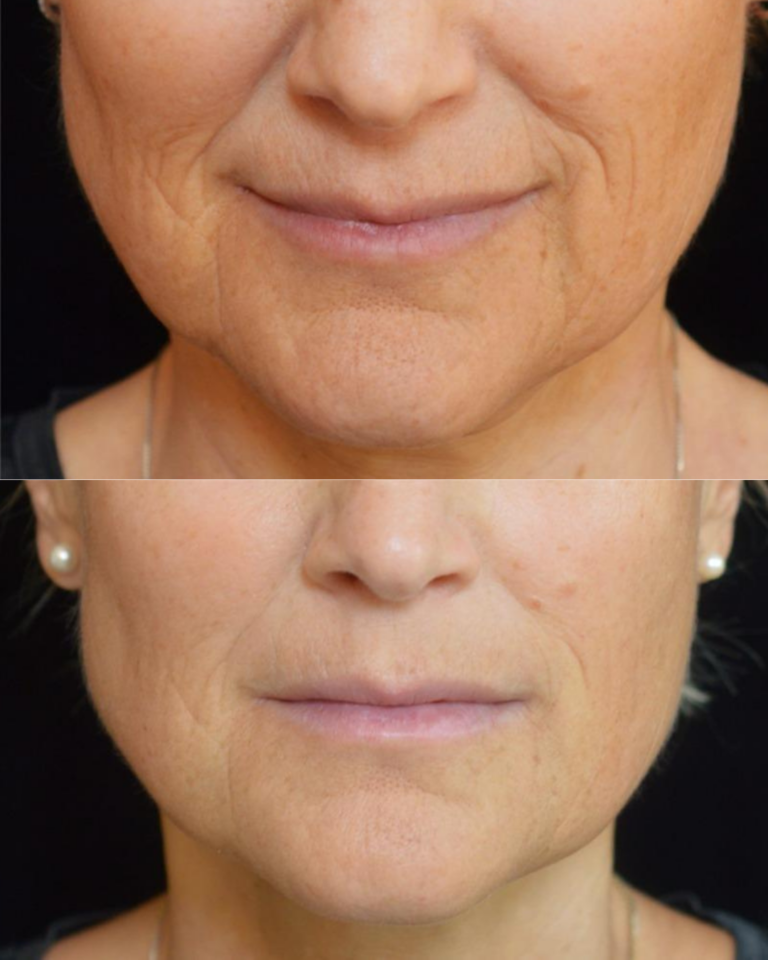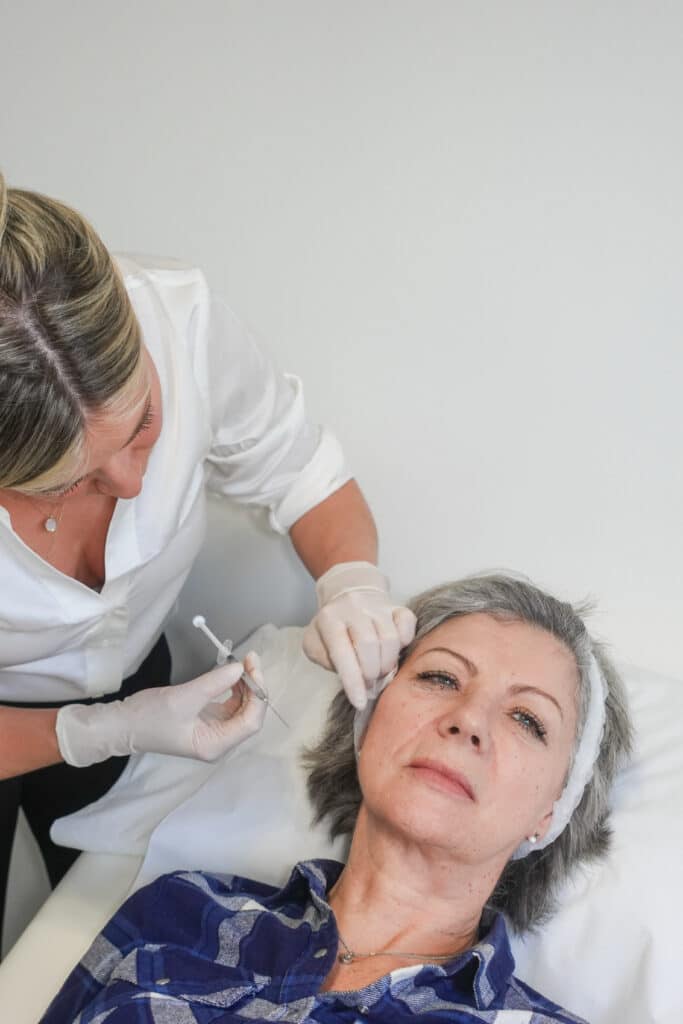
You may not be able to see it clearly in the mirror, not yet at least, but you can feel it. Your skin sits differently. It responds less quickly when you press it. The contours of your face look softer, less defined, as though the structure beneath has quietly begun to give way. If this describes what you are noticing, you are experiencing a loss of skin firmness, and you are far from alone in wanting to understand how to improve skin firmness before the changes become more visible.
Firmness is one of those qualities you tend not to think about until it starts to go. But it is arguably the single most important factor in how youthful and healthy a face looks. More than lines, more than pigmentation, more than volume, it is the tautness and resilience of the skin that gives a face its structure and vitality. When that starts to decline, everything else follows.
At The Bronte Clinic, loss of firmness is one of the concerns we treat often. This article explains what causes it, why it is so difficult to address with skincare alone, and which treatments genuinely rebuild the structural support your skin has lost.
What Causes Loss of Skin Firmness?
Skin firmness is determined by the density and integrity of the collagen and elastin network within the dermis, which is the deeper structural layer of the skin. Collagen provides structure and support, forming the framework that keeps the skin firm and resilient. Elastin provides recoil, allowing the skin to snap back after movement or compression. Together, they form the internal scaffolding that keeps your face looking lifted, defined, and healthy.
From your mid-twenties onward, your body produces progressively less collagen – roughly one to two per cent less each year. Elastin production declines even earlier. The existing fibres become increasingly fragmented and disorganised, losing their ability to maintain structure. Simultaneously, the activity of fibroblast cells, ( the cells responsible for producing collagen and elastin), slows, meaning the skin’s capacity to repair and replenish its own framework diminishes over time. This decline accelerates noticeably from the mid-thirties, and again during the perimenopausal years, when hormonal shifts can significantly intensify the rate of collagen loss.
The result is a gradual softening of the face. The jawline loses definition. The cheeks flatten slightly. Skin that once felt firm and springy begins to feel thinner and less supported. These changes accumulate quietly, year by year, until the cumulative effect becomes impossible to ignore
External factors accelerate the process. Sun exposure is the single greatest contributor to premature collagen degradation. Smoking, chronic stress, poor nutrition, and lack of sleep all compound the decline. Hormonal changes, particularly around perimenopause and menopause, can trigger a sharp acceleration in collagen loss, with some women losing up to 30 per cent of their dermal collagen in the first five years following menopause.
Can Skincare Improve Skin Firmness?
To a limited degree, yes, but skincare alone cannot rebuild firmness that has already been significantly lost. Topical products such as retinoids, peptides, and vitamin C can support collagen production and protect what remains, making them valuable components of any long-term skin health strategy. However, their ability to penetrate into the deeper dermis, where the structural framework resides, is limited. They can slow the rate of decline, but they cannot regenerate the collagen matrix at the scale needed to produce a visible improvement in firmness.
Surface-level treatments such as light chemical peels and standard facials work on the epidermis, the outermost layer, and have minimal impact on the deeper collagen and elastin network. They can improve tone and texture, but they do not address the structural loss that drives firmness decline.
For patients whose firmness has already noticeably deteriorated, knowing how to improve skin firmness effectively means looking beyond the surface to treatments that reach the dermis and stimulate genuine collagen regeneration from within.
Can You Rebuild Skin Firmness Without Surgery?
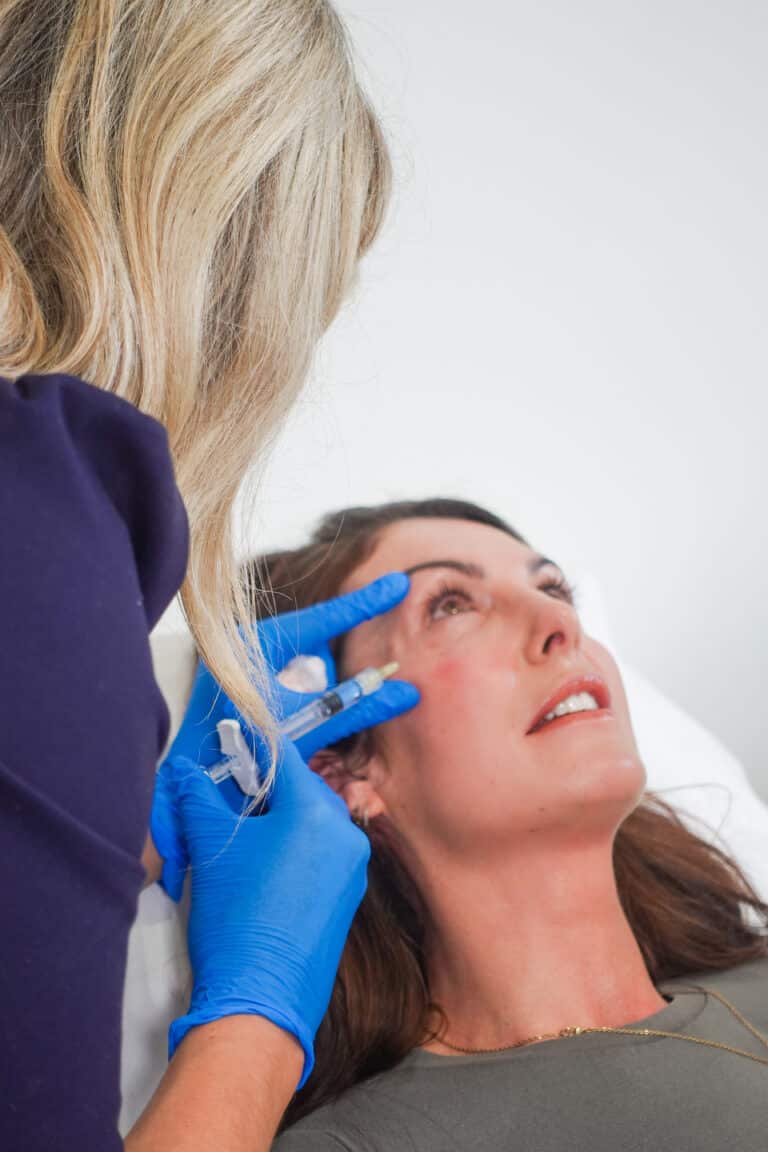
Yes. Non-surgical treatments now exist that can stimulate meaningful collagen regeneration in the deeper layers of the skin, producing a measurable improvement in firmness without any incisions or downtime. The most effective of these are injectable biostimulators – treatments that activate your body’s own collagen-producing cells rather than adding an external substance to the face.
JULÄINE™ is one of the most compelling options in this category. As a poly-L-lactic acid (PLLA) biostimulator, it works in a fundamentally different way to dermal fillers. Rather than adding volume, JULÄINE™ activates your fibroblast cells to produce fresh type I collagen, which is the strongest, most abundant form of collagen in healthy, youthful skin.
Over the following weeks and months, this new collagen gradually rebuilds the structural scaffolding that has weakened, restoring firmness, resilience, and definition from within.
For patients asking how to improve skin firmness, JULÄINE™ is significant for several reasons. The improvement is structural, not cosmetic – it comes from your own collagen, not from an injected product sitting beneath the skin. The results develop gradually over two to three months, producing a natural-looking return to firmness that does not look “done.” And the effects are lasting – results can persist for up to two years, because the collagen your body produces is genuinely yours.
A full course typically involves three sessions spaced four to six weeks apart, allowing each treatment to build on the regenerative process initiated by the previous one. For patients seeking how to improve skin firmness with results that endure, the cumulative effect is a progressive restoration of the internal support structure that firmness relies on.
What Other Treatments Help Improve Skin Firmness?
JULÄINE™ addresses the deepest layer of the firmness problem – collagen framework regeneration. For patients whose loss of firmness is accompanied by changes in skin quality, texture, or laxity, combining it with complementary treatments produces a more comprehensive result.
Morpheus8 radiofrequency microneedling is a particularly effective complement. While JULÄINE™ rebuilds the collagen framework at a deep structural level, Morpheus8 stimulates new collagen production in the upper and mid-dermis – providing an improvement in skin quality and firmness that works in concert with the deeper regeneration beneath. For patients with both firmness loss and visible skin laxity along the jawline, this pairing addresses the concern from two directions simultaneously.”
Polynucleotides can be introduced to improve the biological health and regenerative capacity of the skin itself – enhancing hydration, cellular turnover, and elasticity at a level that complements the structural rebuilding delivered by JULÄINE™. For patients whose loss of firmness is accompanied by dullness, dehydration, and a general tired quality, adding polynucleotides ensures the skin quality matches the structural improvement beneath it.
Which combination is appropriate depends on the individual, and this is why a thorough consultation matters.
Are There Limitations to Non-Surgical Firmness Treatments?
Yes, and being transparent about this is important. JULÄINE™ is exceptionally effective at rebuilding collagen and restoring structural support, but it is not a substitute for surgery in patients with significant skin excess or advanced tissue descent. If your concern has progressed beyond firmness into substantial sagging, our team will tell you that honestly and discuss which approaches may be more appropriate.
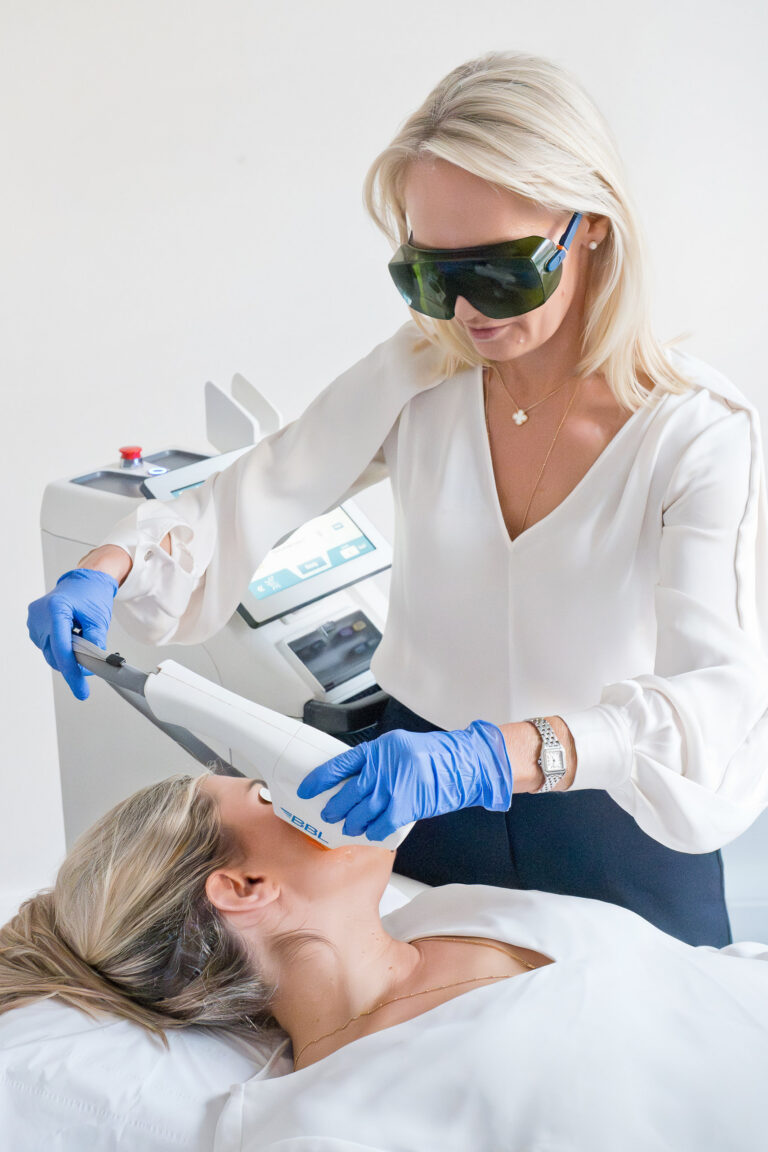
JULÄINE™ also does not address surface-level concerns such as pigmentation, redness, or fine textural irregularities. For patients whose firmness loss is accompanied by visible sun damage or uneven tone, complementary treatments such as BBL may be recommended alongside the structural work.
How Do I Know Which Firmness Treatment Is Right for Me?
The most effective step is to have your skin properly assessed. Loss of firmness can be driven by different factors in different patients, collagen depletion, elastin degradation, dehydration, hormonal changes, or a combination, and the right treatment plan depends on which of these are most relevant to your face.
At The Bronte Clinic, our team led by Medical Director Dr Fiona McCarthy (MBChB, MRCP, PhD), will evaluate the degree of firmness loss, the condition of the underlying collagen framework, and how your skin is ageing across the face. From that assessment, we build a plan that targets the right layers, in the right order, with realistic expectations about what each treatment will achieve.
Understanding how to improve skin firmness starts with understanding your own skin. We are here to help you do that.