If you’re considering injectable treatment to address the visible signs of ageing, you’ve likely come across both dermal fillers and collagen-stimulating biostimulators such as JULÄINE™. While both are delivered via injection and both aim to rejuvenate the face, the way they work, and the results they produce, are fundamentally different. Understanding the distinction between JULÄINE™ vs dermal fillers is essential for choosing the right approach for your skin, your concerns, and your long-term goals.
At The Bronte Clinic, our team is frequently asked to explain the difference between these two treatments. In this article, we break down how each one works, what they’re best suited to, and why the choice between JULÄINE™ vs dermal fillers often comes down to whether you want to add volume or rebuild your skin’s own structural foundation.
How Dermal Fillers Work
Dermal fillers are injectable gels, most commonly made from hyaluronic acid (HA), a substance that occurs naturally in the skin. When injected, they add immediate volume to the treated area – plumping, smoothing, and reshaping the contours of the face. They are particularly effective for defining the lips, restoring volume to the cheeks, softening under-eye hollows, and filling individual lines and folds.
The results are visible straight away, which is one of the reasons dermal fillers remain so popular. However, fillers work by physically occupying space beneath the skin. They do not stimulate your body to produce new collagen or rebuild its own structural support. Over time, the hyaluronic acid is naturally broken down and absorbed by the body, meaning results are temporary, typically lasting anywhere from six to eighteen months depending on the product and the area treated.
Fillers are also reversible. If a patient is unhappy with the result or experiences a complication, the enzyme hyaluronidase can be used to dissolve the product. This is an important safety consideration, and one of the reasons HA fillers remain a cornerstone of aesthetic medicine.
How JULÄINE™ Works
JULÄINE™ takes an entirely different approach. Rather than adding volume directly, it is a poly-L-lactic acid (PLLA) injectable biostimulator that activates your skin’s own regenerative processes. Once injected, its highly uniform PLLA microspheres stimulate fibroblast cells to produce new type I collagen – the strongest, most abundant form of collagen in healthy, youthful skin.
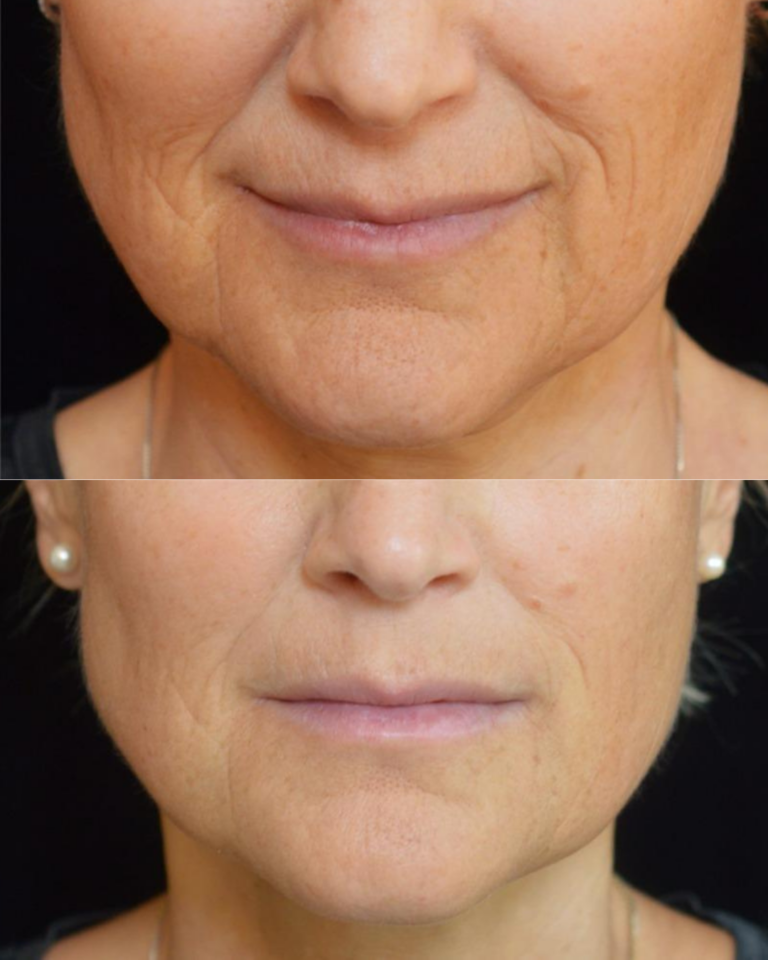
This means JULÄINE™ doesn’t fill, it rebuilds. Over a course of three sessions spaced approximately four to six weeks apart, the skin gradually becomes firmer, tighter, and more supported from within as fresh collagen forms. Results develop progressively over two to three months and can last up to two years, significantly longer than most dermal fillers.
JULÄINE™ is particularly effective for addressing skin laxity, volume loss across broader areas of the face, deep folds such as the nasolabial lines and marionette lines, and an overall loss of facial definition. It works with your biology rather than replacing what’s missing with an external substance.
JULÄINE™ vs Dermal Fillers: The Key Differences
Mechanism of Action
This is the most important distinction when comparing JULÄINE™ vs dermal fillers. Fillers physically add volume where it has been lost, whereas JULÄINE™ acts as a biological trigger, stimulating your body to regenerate its own collagen over time. The difference is between borrowing structure and rebuilding it.
Results Timeline
Dermal fillers produce immediate results. You walk out of the clinic with visible improvement. JULÄINE™ requires patience – initial skin tightening may be noticeable within a few weeks, but the full benefit develops over two to three months as collagen regeneration progresses. For patients who value gradual, natural-looking change that doesn’t announce itself, this timeline is often a significant advantage.
Longevity
Dermal filler results typically last six to eighteen months before the product is naturally absorbed. JULÄINE™ results can last up to two years, because the collagen your body produces in response to the treatment is your own, it doesn’t dissolve or break down in the same way an external gel does.
Treatment Areas
Fillers excel in precise, targeted applications, adding definition to the lips, cheekbones, chin, or jawline, or filling a specific fold or line. JULÄINE™ is better suited to broader rejuvenation of the mid-to-lower face, where the goal is to restore overall firmness, tighten skin, and rebuild structural support rather than add volume to a single point.
Subtlety and Natural Appearance
One of the most common concerns patients raise when discussing JULÄINE™ vs dermal fillers is whether the result will look natural. Because JULÄINE™ stimulates your own collagen, the changes are inherently subtle and progressive. There is no risk of the overfilled or “puffy” appearance that can sometimes occur with dermal fillers when too much product is used or when filler migrates over time.
When to Choose Dermal Fillers
Dermal fillers remain an excellent choice in many clinical scenarios. At The Bronte Clinic, we regularly recommend fillers for patients who want to enhance specific facial features such as the lips, cheeks, or chin, need to address a defined line or fold with precision, want an immediate visible result for a particular occasion, or are looking for a treatment that is reversible.
Fillers are a proven, versatile tool in aesthetic medicine, and they continue to play an important role in our treatment portfolio.
When to Choose JULÄINE™
JULÄINE™ is the stronger choice for patients whose concerns are driven by collagen loss, skin laxity, and structural decline rather than localised volume deficit. We typically recommend JULÄINE™ for patients who are noticing a general loss of facial firmness and definition, have sagging in the mid-to-lower face including jowls and marionette lines, want results that last longer than filler without repeated top-ups, prefer a regenerative approach that works with their body’s own biology, or have been told they need filler but feel their concern is really about skin quality and support rather than volume.
In our experience, many patients who initially enquire about dermal fillers discover during their consultation that JULÄINE™ is better aligned with what they want to achieve.
Can JULÄINE™ and Dermal Fillers Be Combined?
Absolutely, and this is often where the best results are achieved. JULÄINE™ vs dermal fillers is not always an either/or decision. At The Bronte Clinic, we frequently design treatment plans that use JULÄINE™ as a foundational layer to rebuild collagen and structural support across the face, then refine specific areas with targeted dermal filler for definition and precision.
This layered approach combines the long-term regenerative benefits of JULÄINE™ with the immediate, sculpting capability of fillers, delivering results that are both natural and comprehensive. It also works beautifully alongside complementary treatments such as polynucleotides for skin quality, Profhilo® for hydration, or Morpheus8 for skin tightening.
Why The Bronte Clinic for JULÄINE™ and Dermal Fillers
Whether you choose JULÄINE™, dermal fillers, or a carefully planned combination of both, the outcome depends on the expertise behind the treatment. At The Bronte Clinic, every injectable procedure is delivered by experienced, GMC-registered doctors or advanced nurse practitioners regulated by the Care Quality Commission.
Our team, led by Medical Director Dr Fiona McCarthy (MBChB, MRCP, PhD), takes a considered, anatomy-led approach, ensuring that every patient receives a personalised plan based on their unique facial structure, skin quality, and goals.
We believe the choice between JULÄINE™ vs dermal fillers should never be driven by trend or assumption. It should be guided by a thorough consultation, honest clinical advice, and a clear understanding of what each treatment can, and cannot, achieve.