It builds up quietly. A freckle that was once barely visible becomes a defined brown spot. The even complexion you had in your twenties gives way to patches of pigmentation that no concealer quite covers. Redness appears across your cheeks and nose. The texture of your chest changes. None of it happened overnight, and yet the cumulative effect can feel as though your skin aged a decade in the space of a year. If this sounds familiar, you are almost certainly looking at the consequences of sun damage, and you are far from alone in searching for an effective sun damage treatment.
At The Bronte Clinic, sun damage is one of the most common concerns we see. It affects patients of all ages and all skin types, and its effects extend far deeper than what you can see on the surface. The good news is that it is also one of the concerns where the right treatment can produce the most visible, satisfying transformation, particularly when that treatment is BroadBand Light (BBL).
What Sun Damage Actually Does to Your Skin
To understand why an effective sun damage treatment matters, it helps to understand what ultraviolet radiation does beneath the surface.
UV exposure does not simply darken or discolour the skin. It causes structural damage at a cellular level. UVA rays penetrate deep into the dermis, breaking down collagen and elastin – the proteins responsible for keeping skin firm, elastic, and resilient. UVB rays damage the DNA within skin cells, triggering mutations that can lead to irregular pigmentation, rough texture, and in more serious cases, pre-cancerous changes.
Over years and decades, this damage accumulates. Melanocytes (the cells that produce pigment) become dysregulated, producing melanin unevenly and creating the brown spots, sunspots, and patches of hyperpigmentation that are the most recognisable hallmarks of photodamaged skin. The collagen matrix weakens, contributing to fine lines, crepey texture, and loss of firmness. Blood vessels dilate and proliferate, producing persistent redness and visible capillaries.
What makes sun damage particularly challenging is that much of it is invisible. Studies estimate that up to 80 per cent of visible facial ageing is attributable to UV exposure, and a significant portion of that damage is already present in the skin long before it becomes visible to the naked eye. By the time you notice a sunspot, the underlying changes have been developing for years.
This is why choosing the right sun damage treatment is about more than clearing surface pigmentation. The most effective approach addresses what is happening beneath it.
Why BBL Is One of the Most Effective Sun Damage Treatments Available
Unlike ablative lasers, which resurface the skin by removing its outer layer, BBL (BroadBand Light) works differently. It delivers targeted light energy that is absorbed by pigment, redness, and damaged tissue within the skin, allowing it to treat multiple signs of sun damage simultaneously.
When BBL energy is absorbed by melanin in pigmented lesions, it breaks down the excess pigment, which rises to the skin’s surface over the following days before naturally flaking away. The result is a visibly clearer, more even complexion. At the same time, BBL energy absorbed by haemoglobin in dilated blood vessels reduces redness and the appearance of broken capillaries. And at a deeper level, the controlled thermal energy stimulates fibroblast activity and fresh collagen production, improving skin texture, tone, and firmness over time.
This multi-target capability is what makes BBL such a powerful sun damage treatment. Rather than addressing one symptom in isolation (pigmentation or redness or texture), it works across all three simultaneously, producing a comprehensive improvement in overall skin quality.
The Stanford University Research: Rejuvenation at a Molecular Level
What truly distinguishes BBL from other light-based treatments is the landmark research conducted at Stanford University School of Medicine, led by dermatologist Dr Anne Lynn S. Chang.
Published in the Journal of Investigative Dermatology, the study examined the molecular effects of BBL treatment on aged human skin. The findings were remarkable. Of the 2,265 genes found to have altered expression levels as a result of ageing, 1,293 were effectively “rejuvenated” following BBL treatment, meaning their expression patterns shifted to more closely resemble those found in young, undamaged skin.
Among the rejuvenated genes were several known regulators of cellular ageing and longevity, including genes involved in DNA repair, immune response, and collagen synthesis. The study concluded that BBL treatment could restore the gene expression pattern of photoaged and intrinsically aged skin to resemble that of younger skin, suggesting that the clinical improvements patients see are not merely cosmetic, but reflect genuine biological rejuvenation at a molecular level.
This distinction is significant. Many sun damage treatments improve the appearance of the skin by removing or resurfacing damaged tissue. BBL appears to go further, altering how aged skin cells behave and function. It is, as the Stanford researchers described it, a functional change rather than just a cosmetic mimic of youthful appearance.
For patients seeking a sun damage treatment grounded in rigorous science, this research provides a level of clinical evidence that few other technologies can match.
What BBL Can Treat
At The Bronte Clinic, we use BBL to address a wide range of sun damage-related concerns, including sunspots and age spots (solar lentigines), diffuse pigmentation and uneven skin tone, freckles that have darkened or spread with age, redness and flushing including early rosacea, visible capillaries and broken blood vessels, rough or uneven skin texture, and fine lines associated with collagen loss.
BBL can be used on the face, neck, décolletage, hands, and arms – all areas commonly affected by cumulative sun exposure.
What to Expect from Treatment
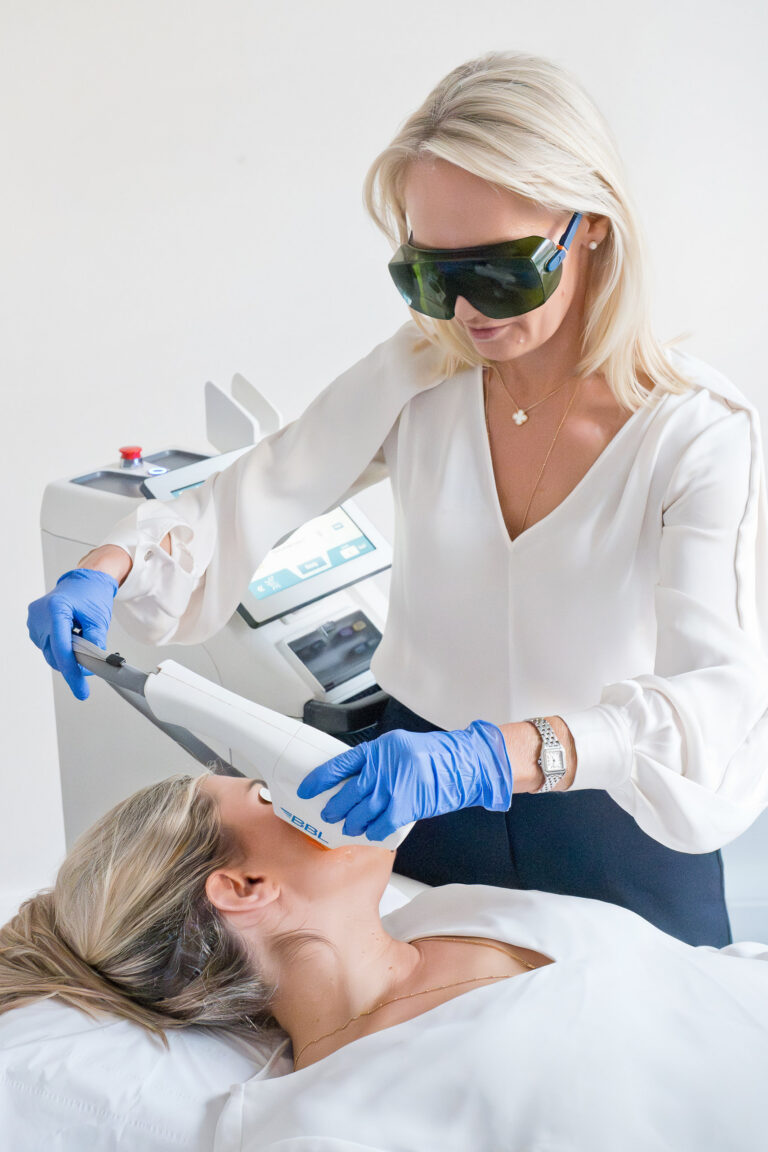
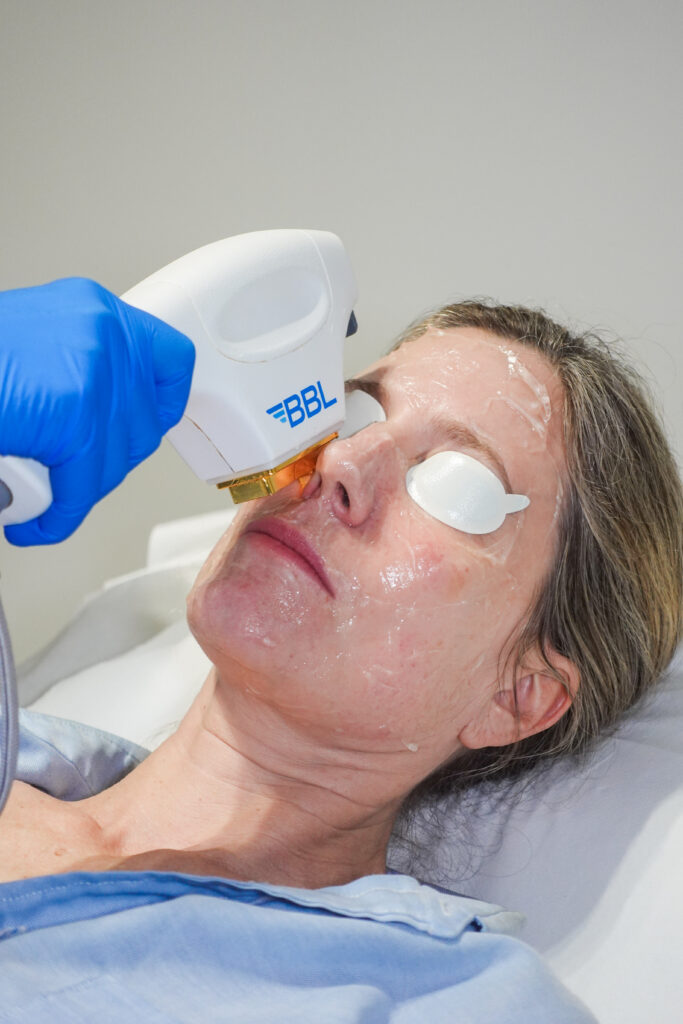
A BBL session at The Bronte Clinic typically takes 15 to 30 minutes depending on the area being treated. The procedure involves the application of a cooling gel to the skin, followed by a series of light pulses delivered via a handheld device. Most patients describe the sensation as a brief, warm snap – noticeable but not painful.
In the days following treatment, pigmented spots will darken before naturally flaking away over the course of one to two weeks. This is a normal and expected part of the process – it is the damaged pigment being brought to the surface and shed. Redness and flushing typically improve more gradually over subsequent sessions.
Most patients see noticeable improvement after a single session, with optimal results developing over a course of three to five treatments spaced three to four weeks apart. BBL requires no downtime, and patients can return to their normal activities immediately.
BBL as Part of a Broader Sun Damage Treatment Strategy
While BBL is exceptionally effective on its own, it can also be combined with complementary treatments for patients with more advanced or multi-layered sun damage.
Medical microneedling pairs well with BBL for patients who want to address both pigmentation and deeper textural concerns. Polynucleotides can be introduced to support cellular regeneration and improve overall skin quality at a biological level. And for patients with significant collagen loss contributing to skin laxity alongside sun damage, Morpheus8 offers deeper structural remodelling that complements BBL’s surface and mid-level corrections.
Of course, no sun damage treatment strategy is complete without ongoing protection. Medical-grade SPF, antioxidant serums, and sensible sun behaviour are essential for preserving results and preventing further damage. Our team will advise on the most appropriate skincare routine to support your treatment outcomes.
The Right Assessment Makes the Difference
Not all pigmentation is sun damage, and not all sun damage responds to the same approach. Conditions such as melasma, for example, require a very different treatment strategy and can be worsened by certain light-based therapies if misdiagnosed. This is why a proper clinical assessment is essential before any sun damage treatment begins.
At The Bronte Clinic, our team includes Consultant Dermatologist Dr Alpa Kanji (MA, PhD Cantab, MBBS, MRCP Derm) alongside Medical Director Dr Fiona McCarthy (MBChB, MRCP, PhD) and Dr Carole Reid (MBBS, MA Hons). Having a consultant dermatologist within our team means we can accurately diagnose the nature and cause of your pigmentation before recommending a treatment, ensuring that what you receive is not only effective but safe.
Ready to address your sun damage properly? Book a consultation at The Bronte Clinic in London or Surrey and let our team assess your skin and design a treatment plan built around the science.