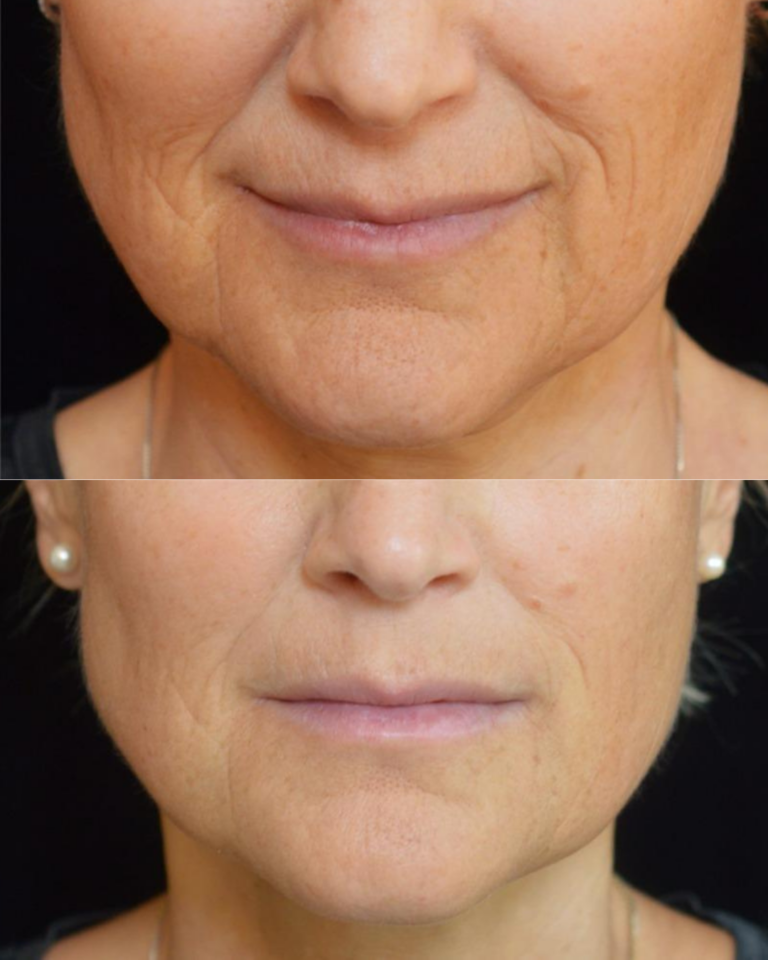
They are among the first lines people notice, and among the last they learn to understand properly. The creases that run from the sides of the nose to the corners of the mouth, known clinically as nasolabial folds, are one of the most searched aesthetic concerns in the UK. If you have found yourself asking what the most effective non-surgical treatments for nose to mouth lines are, you are not alone, and the answer may be more nuanced than you expect.
Most of what you will read online points to one solution: dermal filler. Fillers can be an excellent option, and at The Bronte Clinic we use them regularly and to great effect. But they are not the only option, and for many patients, they may not be the best one. The deeper question, and the one most articles never ask, is not how to fill the fold, but why the fold appeared in the first place. When you understand that, the range of effective non-surgical treatments for nose to mouth lines opens up considerably.
Why Nose to Mouth Lines Form: It Is Not Just About the Crease
Most people think of nose to mouth lines as something that can simply be smoothed away. But the fold itself is really a symptom of broader structural changes happening across the mid-face.
As we age, the deep fat pads that sit high on the cheeks begin to lose volume and descend. The bones of the mid-face gradually resorb, reducing the skeletal scaffolding that once supported the overlying soft tissue. Collagen and elastin production slows, weakening the skin’s internal structure and its ability to resist gravity. The combined effect is a downward shift of tissue that creates a visible crease where the cheek meets the upper lip.
This is why nose to mouth lines tend to deepen gradually over years, and why they are often accompanied by other signs of mid-face ageing, such as flattening of the cheeks, early jowling, and a general loss of definition along the jawline. They are not an isolated line. They are part of a broader pattern of volume loss, structural weakening, and skin quality decline.
Understanding this matters enormously when deciding which non-surgical treatments for nose to mouth lines will actually deliver a lasting result, because it changes what you are treating.
Dermal Fillers: When They Work Well and When They Are Not Enough
Dermal fillers work by injecting hyaluronic acid gel directly into or around the fold, physically plumping the crease and softening its appearance. The results are immediate, the procedure is quick, and in skilled hands the improvement can look beautifully natural.
For patients with a well-defined fold and relatively good skin quality, fillers are often exactly the right approach. They are also reversible (an important safety advantage) and can be topped up as needed over time.
Where fillers reach their limit is in patients whose nose to mouth lines are driven primarily by structural decline rather than localised volume loss. In these cases, filling the fold addresses the symptom but does nothing to resolve the underlying cause. The cheek is still deflated. The collagen framework is still weakened. The skin is still losing its ability to support itself. Over time, patients in this category can find themselves needing more filler, more frequently, to maintain the same result, and there is a point at which adding further product becomes counterproductive.
This is not a criticism of fillers. It is simply an acknowledgement that they are designed to do one thing – add volume – and that not every nose to mouth line is best treated with volume alone.
Collagen Biostimulation: A Different Answer to the Nose to Mouth Lines Question
For patients asking what the most effective non-surgical treatments for nose to mouth lines are that go beyond temporary correction, collagen biostimulation offers a compelling alternative.
JULÄINE™ is a poly-L-lactic acid (PLLA) injectable biostimulator that works in a fundamentally different way to filler. Rather than adding additional volume to the treatment area, it activates the skin’s own fibroblast cells to produce fresh type I collagen – the structural protein responsible for firmness, elasticity, and support.
For nose to mouth lines driven by collagen loss and mid-face structural decline, this approach has a distinct advantage. JULÄINE™ does not just soften the appearance of the fold; it works to rebuild the tissue quality and structural support across the broader treatment area. As new collagen forms over the weeks and months following treatment, the skin becomes firmer, the mid-face gains subtle lift, and the nose to mouth lines themselves become less pronounced, not because they have been filled, but because the face is better supported from within.
Results develop gradually over two to three months and can last up to two years. For patients who are frustrated by the cycle of regular filler top-ups, or who feel that their concern is about facial structure and skin quality rather than a single line, JULÄINE™ represents a meaningfully different pathway.
How We Determine the Right Approach
At The Bronte Clinic, we never default to one treatment over another. Identifying the most effective non-surgical treatments for nose to mouth lines in each individual case requires a proper assessment, not an assumption.
During a consultation, our team evaluates the depth and character of the fold itself, the degree of mid-face volume loss, the quality and thickness of the surrounding skin, the patient’s broader facial structure and how it has changed over time, and their goals, lifestyle, and preference for maintenance frequency.
Some patients are best served by dermal filler, particularly when the fold is well-defined and the surrounding skin quality is good. Others are better suited to JULÄINE™, especially when the nose to mouth lines are part of a wider pattern of structural ageing and the priority is long-term improvement rather than an immediate cosmetic correction.
In many cases, the most effective approach is a combination of both. JULÄINE™ can be used to rebuild the collagen framework and structural support across the mid-to-lower face, creating a stronger foundation. Targeted filler can then be placed precisely within the fold itself to refine the final result. This layered strategy addresses the root cause and the visible symptom simultaneously, delivering an outcome that looks natural and lasts longer than either treatment alone.
Complementary treatments such as polynucleotides for skin quality, Profhilo® for hydration, or Morpheus8 for skin tightening can also be incorporated where appropriate, further enhancing the result.
Why a Consultation-First Approach Matters
One of the risks of the “filler first” culture that dominates much of the aesthetic industry is that patients are offered a treatment before their concern has been properly understood. A nose to mouth line that looks the same on two different patients may have entirely different causes, and therefore entirely different optimal treatments.
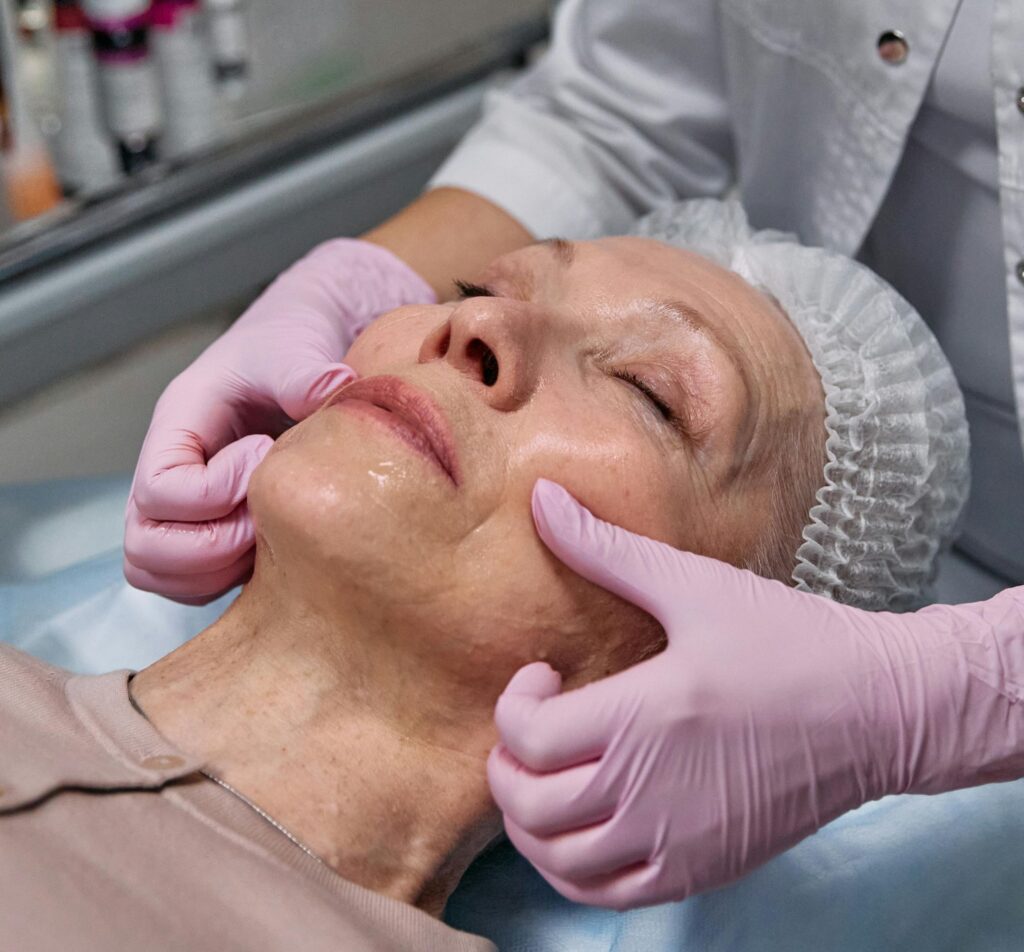
At The Bronte Clinic, every treatment plan begins with a thorough consultation. Our team, led by Medical Director Dr Fiona McCarthy (MBChB, MRCP, PhD), takes time to assess the full picture – facial anatomy, skin condition, ageing patterns, and treatment history – before recommending an approach. We believe this is the only responsible way to ensure patients receive a result that genuinely addresses their concern, rather than simply masking it.
So, if you are still wondering what the most effective non-surgical treatments for nose to mouth lines are, the honest answer is: it depends on what is causing yours. And the only way to find that out is to have your skin properly assessed by a team with the expertise to tell the difference.
Concerned about nose to mouth lines and unsure which treatment is right for you? Book a consultation at The Bronte Clinic in London or Surrey for an honest, expert assessment.