Your thirties are a turning point for your skin. Not in a dramatic, overnight way, but in the quiet, incremental shifts that most people only recognise in hindsight. Collagen production begins to slow. Cell turnover decelerates. The early effects of sun exposure, stress, and lifestyle start to surface as fine lines, dullness, and the first subtle loss of firmness. It is precisely this decade that determines how your skin will age in the one that follows, which is why choosing the right anti-ageing treatments in your 30s is one of the most impactful investments you can make in your long-term skin health.
The problem is that most advice on this topic falls into one of two camps. On one side, there are the articles that tell you to start Botox immediately – pushing injectables before your skin has any real need for them. On the other, there are the surface-level guides that stop at sunscreen and retinol, as though a morning routine alone can hold back a decade of biological change. Neither approach reflects how good aesthetic medicine actually works.
At The Bronte Clinic, we take a different view. We believe the most effective anti-ageing treatments in your 30s follow a three-stage strategy, building from essential skincare foundations, through targeted maintenance treatments, to regenerative support when the time is right. Each layer serves a distinct purpose, and together they create a comprehensive framework for ageing well.
Stage One: Skincare Foundations – The Non-Negotiable Starting Point
No clinic treatment, however advanced, will deliver its full potential if the basics are not in place. Before considering any in-clinic procedure, patients in their thirties should have a consistent, evidence-based skincare routine built around a few key pillars.
Medical-grade SPF is the single most important product in any anti-ageing strategy. Ultraviolet radiation is responsible for up to 80 per cent of visible skin ageing, including fine lines, pigmentation, loss of elasticity, and uneven texture. A broad-spectrum SPF 50 or higher, applied daily, is foundational. Without it, every other treatment you invest in is working against an ongoing source of damage.
Retinoids are the gold standard for stimulating cell turnover and collagen production at home. Whether prescription-strength tretinoin or a well-formulated retinol, these vitamin A derivatives accelerate the replacement of damaged surface cells, smooth fine lines, and improve skin tone over time. They are one of the few topical ingredients with decades of clinical evidence supporting their anti-ageing efficacy.
Antioxidants, particularly vitamin C, provide a layer of defence against environmental damage from UV exposure, pollution, and oxidative stress. Applied in the morning beneath SPF, a quality antioxidant serum neutralises free radicals before they can break down collagen and accelerate ageing.
Barrier repair is often overlooked but equally important. A healthy skin barrier retains moisture, protects against irritants, and supports the effectiveness of active ingredients. Ingredients such as ceramides, niacinamide, and hyaluronic acid help to maintain barrier integrity, particularly for patients who are introducing retinoids or active treatments for the first time.
This first stage is not glamorous, but it is where effective anti-ageing treatments in your 30s begin. Get this right, and everything that follows works harder.
Stage Two: Skin Quality and Maintenance – Addressing Early Changes Before They Accumulate
For patients whose skincare routine is already well-established, the thirties are the ideal time to introduce targeted clinic treatments that maintain skin quality and address early concerns before they become entrenched.
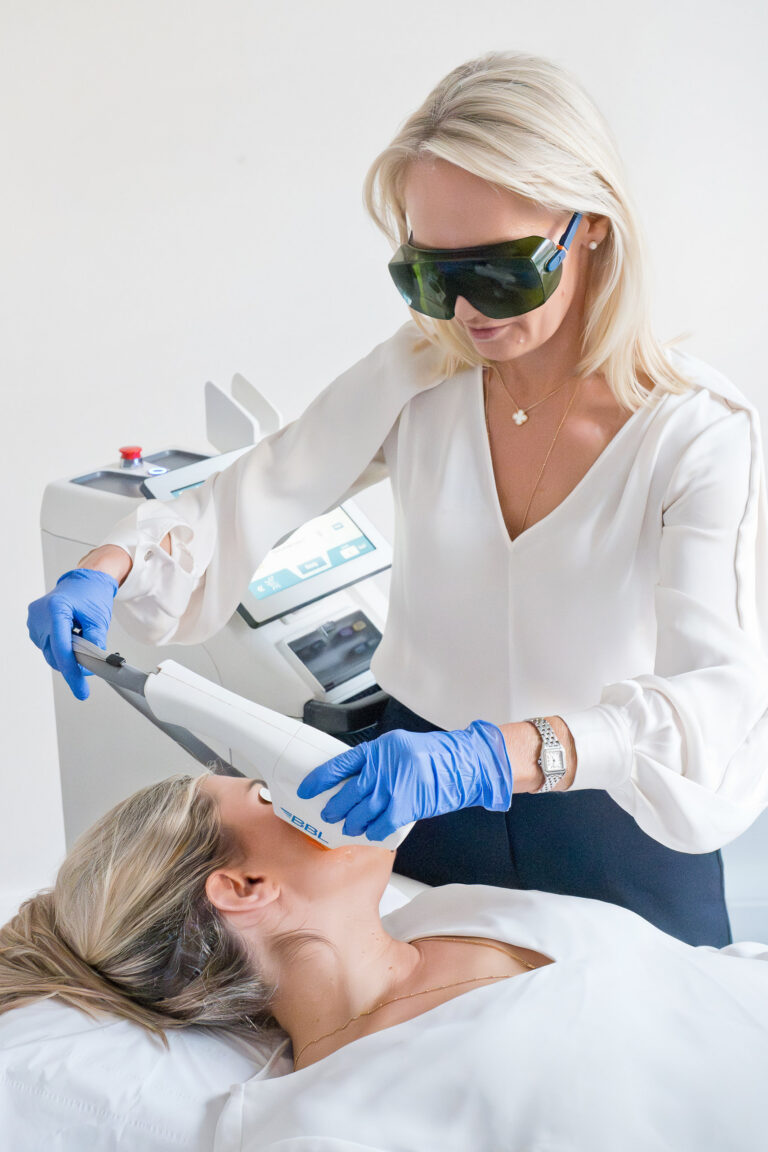
BBL (BroadBand Light) therapy is one of the most effective tools available for this purpose. BBL delivers broad-spectrum light energy into the skin, targeting early pigmentation, diffuse redness, and uneven tone while simultaneously stimulating collagen production at a cellular level. Research from Stanford University has demonstrated that regular BBL treatments can alter gene expression in aged skin cells, causing them to behave more like younger cells, making it one of the few treatments proven to have a genuinely preventative effect at a molecular level.
For patients in their thirties, BBL is particularly valuable because it addresses the cumulative sun damage that has been quietly building since adolescence. Even if your skin looks relatively clear today, underlying pigmentation and vascular changes are often already present and BBL can correct them before they become visible, while simultaneously slowing future decline.
Medical microneedling is another excellent addition at this stage. By creating thousands of controlled micro-channels in the skin, microneedling triggers the body’s natural wound-healing response, stimulating fresh collagen and elastin production and accelerating cellular turnover. It is effective for refining skin texture, minimising early pore enlargement, and maintaining a smooth, even complexion. When performed regularly as part of an ongoing maintenance plan, microneedling helps to preserve the skin quality you already have rather than waiting to restore what has been lost.
These treatments are not about correcting visible ageing. They are about maintaining the skin’s health, clarity, and resilience so that more intensive interventions are needed less, or later. This is the stage of anti-ageing treatments in your 30s that most articles skip entirely, but it is arguably the most
valuable.
Stage Three: Regenerative Support – Building Reserves for the Decade Ahead
For patients who have their skincare foundations in place and are already maintaining their skin with targeted treatments, the third stage introduces regenerative therapies that work at a deeper biological level. These are not first-line treatments, they are intelligent additions for patients ready to invest in long-term skin health before visible decline sets in.
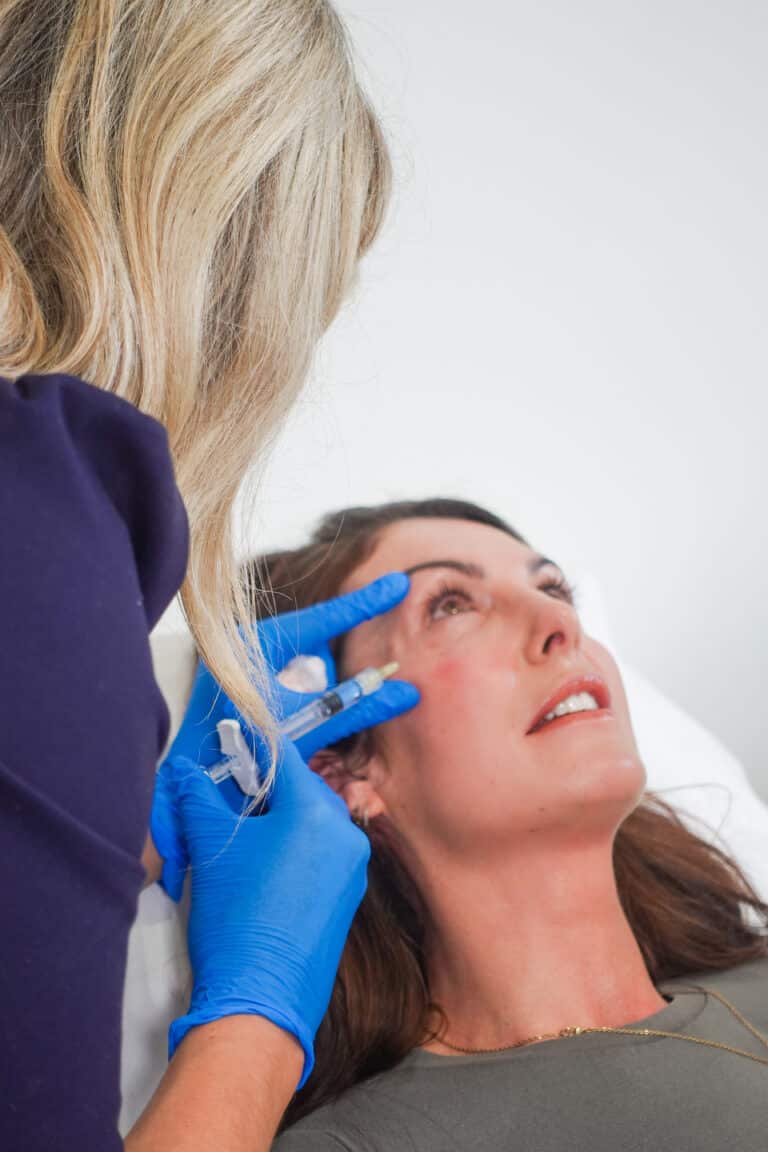
At The Bronte Clinic, we are not advocates of preventative Botox in younger patients. Our philosophy is non-injectables first – building skin health through the foundations and maintenance treatments outlined above before considering anything delivered by a needle. When we do recommend an injectable treatment for patients in their early thirties, it is one that offers genuine long-term biological benefit rather than a short-lived cosmetic correction.
Polynucleotides are the treatment that best fits this criterion. Derived from purified DNA fragments, polynucleotides stimulate fibroblast activity, prompting the skin to produce more collagen and elastin while improving hydration, cellular turnover, and overall tissue quality. For patients in their thirties, this represents a form of collagen banking – actively building and preserving the structural reserves that the skin will draw on in the years ahead. Unlike treatments that offer a temporary visual improvement, polynucleotides create lasting change at a cellular level, which is why they are the only injectable we routinely recommend to our younger patients.
Polynucleotides are particularly well-suited to patients who are noticing the very earliest signs of change – a slight loss of bounce, skin that does not recover as quickly from late nights or stress, or a dullness that skincare alone no longer resolves. They address these concerns not by masking them, but by improving how the skin functions from within.
That said, if static lines are beginning to develop – lines that remain visible even when the face is at rest – anti-wrinkle treatments can be discussed and may be appropriate. But the decision depends entirely on the degree of visible ageing, and it is always made on a case-by-case basis during a consultation. Our approach is to exhaust non-injectable options first and introduce anti-wrinkle injections only when they are genuinely warranted, not as a blanket preventative measure.
Polynucleotides represent the most forward-thinking layer of anti-ageing treatments in your 30s, not because every patient needs them immediately, but because for those who are ready, they offer a level of preventative care that no topical product or surface treatment can match.
Why the Order Matters
One of the reasons this three-stage framework works so well is that each layer builds on the one before it. SPF and retinoids protect and maintain. BBL and microneedling correct early changes and sustain quality. Polynucleotides and Profhilo® regenerate and future-proof. Skip the foundations and your clinic treatments will underperform. Rush to injectables without addressing skin quality first and you are treating symptoms rather than causes.
At The Bronte Clinic, this staged approach is exactly how we advise patients in their thirties. During a consultation, our team assesses where you currently sit within this framework – what is already in place, what is missing, and what your skin is likely to need over the coming years – and builds a plan that meets you where you are rather than pushing you toward treatments you are not yet ready for.
Starting the Conversation
The best time to think about anti-ageing treatments in your 30s is before you feel you need them. Prevention is always simpler, more effective, and more cost-efficient than correction. Whether you are just beginning to build a skincare routine or you are ready to explore regenerative treatments, the starting point is always the same: an honest, expert assessment of your skin.
Our team, led by Medical Director Dr Fiona McCarthy (MBChB, MRCP, PhD), is here to help you navigate that process with clarity and without pressure.
Ready to invest in your skin’s future? Book a consultation at The Bronte Clinic in London or Surrey and let our team design a preventative plan built around your skin, your goals, and your stage of life.