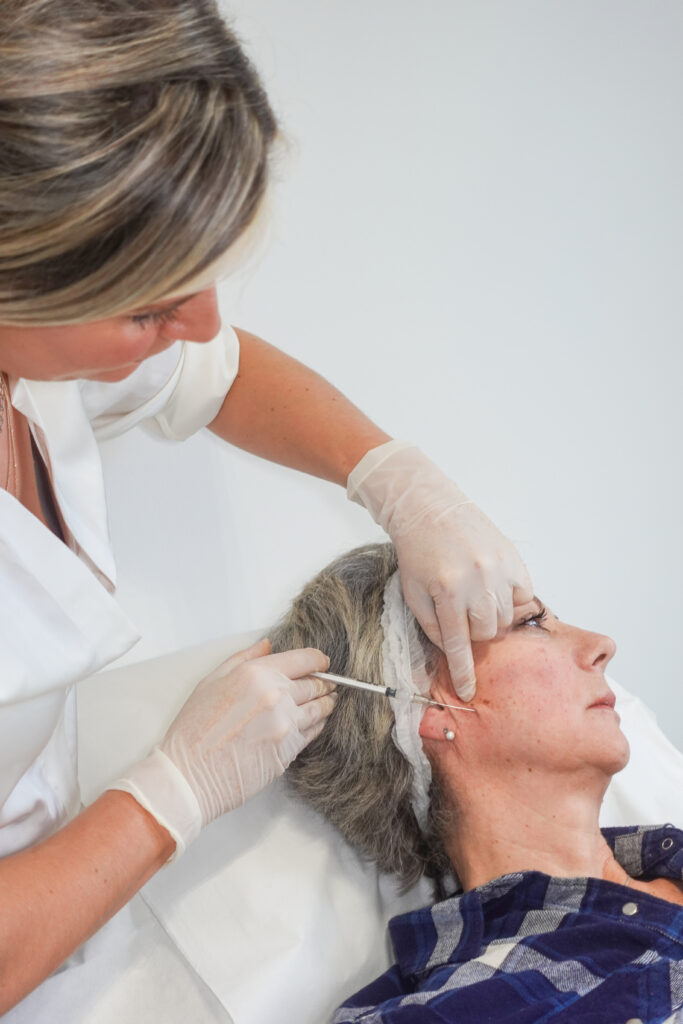
One of the most common questions our medical team is asked about polynucleotide injections is not whether they work, but where they work best. The answer is that polynucleotide treatment areas span the full face, neck, and décolletage, but what you can expect from the treatment varies meaningfully depending on the zone being treated. The thickness of your skin, the degree of sun damage, the underlying anatomy, and even the way a particular area moves all influence how polynucleotides perform and how quickly results become visible.
At The Bronte Clinic, we take a zone-by-zone approach to polynucleotide therapy, tailoring every treatment plan to the specific needs of each area. In this article, our medical team explain what happens in each of the most popular polynucleotide treatment areas, what realistic results look like, and why a one-size-fits-all approach simply doesn’t apply.
Why Results Vary Across Different Polynucleotide Treatment Areas
Polynucleotides work by stimulating fibroblast activity, encouraging your skin to produce more collagen and elastin from within. However, fibroblast density, skin thickness, and blood supply differ considerably from one part of the body to another. The under-eye area, for example, has some of the thinnest skin on the entire body, while the décolletage is subject to years of cumulative sun exposure that the face may have been spared.
These anatomical differences mean that the rate of improvement, the number of sessions required, and the longevity of results can all vary across polynucleotide treatment areas. Understanding this is essential for setting realistic expectations, and it is something our team discusses in detail during every consultation.
Under-Eyes: The Most Delicate Treatment Zone
The periorbital area is one of the most requested polynucleotide treatment areas, and for good reason. The skin beneath the eyes is exceptionally thin, with minimal subcutaneous fat and a dense network of superficial blood vessels. As we age, collagen loss in this zone leads to visible dark circles, a hollow or sunken appearance, fine crepey lines, and a tired look that no amount of sleep seems to resolve.
Polynucleotides are particularly well-suited to the under-eyes because they improve skin quality without adding volume. Unlike dermal fillers, which can sometimes appear unnatural or create puffiness in this delicate area, polynucleotides work by strengthening the skin itself, thickening it from within, improving hydration, and reducing the visibility of underlying blood vessels that contribute to dark circles.
Most patients notice a visible brightening and smoothing of the under-eye area within seven to ten days, with full results developing over the following weeks. We typically recommend two to three sessions for optimal improvement in this zone.
For a closer look at under-eye results specifically, including before and after images, see our dedicated article: How Polynucleotides Transform Under-Eye Appearance.
Mid-Face: Restoring Radiance and Firmness
The cheeks, nasolabial region, and mid-face represent polynucleotide treatment areas where patients often see some of the most satisfying improvements in overall skin quality. This zone tends to have thicker skin than the under-eyes, a richer blood supply, and a higher density of fibroblasts – all of which support a robust response to biostimulation.
When polynucleotides are injected into the mid-face, patients can expect a noticeable improvement in skin hydration and luminosity, often described as a healthy, lit-from-within glow. Over subsequent weeks, as collagen and elastin production increases, the skin becomes visibly firmer and smoother, with fine lines softening and overall texture becoming more refined.
The mid-face also responds well to polynucleotides as part of a combination approach. We frequently pair polynucleotide therapy in this zone with treatments such as Profhilo® for deep hydration or JULÄINE™ for structural collagen stimulation, creating a layered rejuvenation strategy that addresses skin quality and support simultaneously.
Neck: Addressing a Commonly Overlooked Area
Many patients are surprised to learn that the neck is one of the most effective polynucleotide treatment areas, and one of the most overlooked. The skin on the neck is thinner than the mid-face, frequently neglected in daily skincare routines, and subject to constant movement from turning, tilting, and looking down. Over time, this combination leads to horizontal creases, crepey texture, and a loss of firmness that can make the neck appear significantly older than the face above it.
Polynucleotides help to address these concerns by improving the skin’s structural integrity at a cellular level. Patients undergoing neck treatment can expect a gradual improvement in skin tightness and elasticity, a softening of fine horizontal lines, and a smoother, more even skin texture. Because the neck skin is thinner, results may develop slightly more gradually in this zone, and a full course of two to three sessions is particularly important.
For patients who have invested in facial treatments but feel their neck is letting them down, polynucleotides offer one of the most effective non-surgical solutions available. The treatment pairs exceptionally well with Morpheus8 radiofrequency microneedling for patients seeking more intensive tightening alongside skin quality improvement.
Décolletage: Reversing the Signs of Sun Damage and Ageing
The décolletage is among the most challenging polynucleotide treatment areas, and one of the most rewarding when treated correctly. This area is particularly prone to photodamage, where years of sun exposure can leave chest skin thin, crepey, and often marked by pigmentation changes and a web of fine lines that are difficult to camouflage. What makes the décolletage especially responsive to polynucleotides is the treatment’s ability to simultaneously improve skin hydration, texture, and elasticity. The regenerative effect of polynucleotides (stimulating cellular repair and fresh collagen production), can be transformative, restoring a smoother, more resilient quality to skin that has been significantly compromised.
Patients should expect results in the décolletage to develop more gradually than in the face or under-eyes, reflecting the extent of existing damage. A course of three sessions is generally recommended, and many patients find that combining polynucleotides with BBL (BroadBand Light) therapy addresses both textural concerns and pigmentation in a single, comprehensive treatment plan.
Tailoring Your Treatment Plan Across Multiple Areas
One of the greatest strengths of polynucleotide therapy is that different treatment areas can be addressed within the same session or across a phased plan. Our medical team frequently treat multiple polynucleotide areas in a single appointment, combining the under-eyes and mid-face for instance, or addressing the face and neck together for a more cohesive result.
The key is a thorough initial consultation in which we assess each zone individually, discuss your priorities, and design a treatment schedule that delivers the most natural, balanced outcome. Every patient’s skin is different, and every area of the face and body ages at its own pace. Our role is to ensure your treatment plan reflects that.
Considering polynucleotide treatment for one or more areas? Book a consultation at The Bronte Clinic in London or Surrey and let our medical team create a personalised plan tailored to your skin.