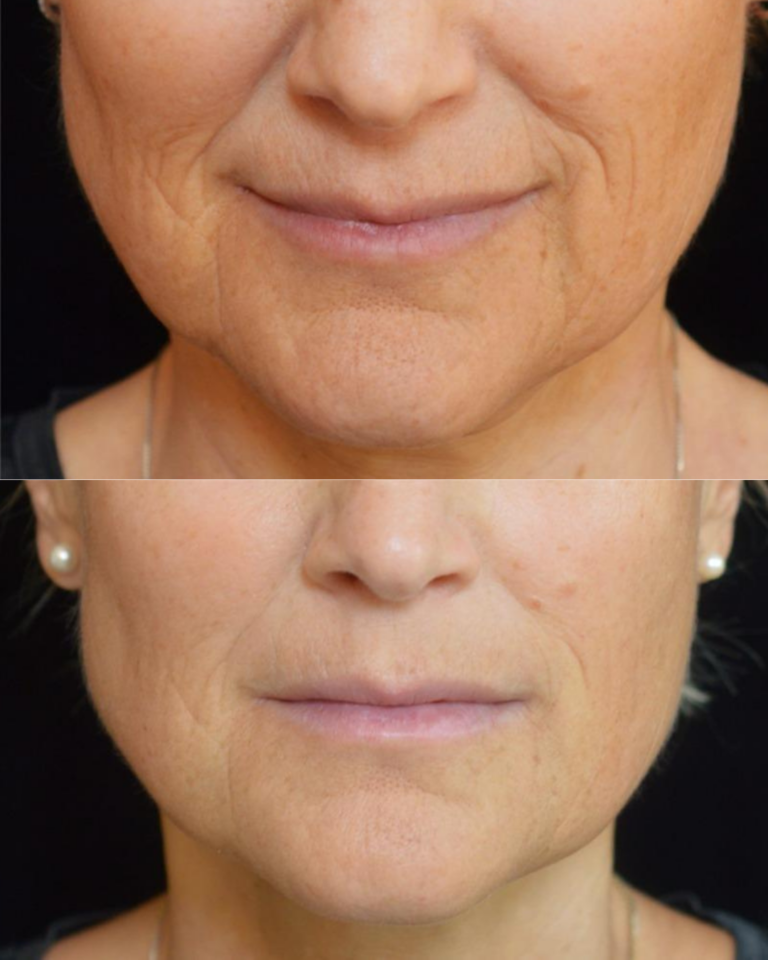
If you’re exploring collagen-stimulating treatments, the question of JULÄINE™ vs Sculptra is one you’ll encounter time and again. Both are injectable biostimulators made from poly-L-lactic acid (PLLA), both work by encouraging your body to produce its own collagen, and both deliver gradual, natural-looking results that can last up to two years. So, what sets them apart, and why have we chosen JULÄINE™ at The Bronte Clinic?
In this article, our medical team breaks down the key differences between JULÄINE™ vs Sculptra, explains the science behind each treatment, and outlines why we believe JULÄINE™ represents a meaningful step forward in regenerative aesthetics.
What Are Collagen Biostimulators?
Before comparing JULÄINE™ vs Sculptra directly, it helps to understand what collagen biostimulators do and how they differ from other injectable treatments.
Unlike dermal fillers, which use hyaluronic acid to add immediate volume, biostimulators take a regenerative approach. They are injected into the skin to activate fibroblast cells – the cells responsible for producing collagen and elastin. Over time, this stimulates your body to rebuild its own structural framework, resulting in firmer, smoother skin that improves gradually and looks entirely natural.
Both JULÄINE™ and Sculptra are Poly-L-lactic acid-based biostimulators. Poly-L-lactic acid is a biocompatible, biodegradable substance that has been safely used in medicine for decades, including in dissolvable sutures. However, while they share the same core ingredient, the technology, formulation, and patient experience differ considerably between the two.
JULÄINE™ vs Sculptra: The Key Differences
Particle Technology and Formulation
When it comes to JULÄINE™ vs Sculptra, one of the most significant differences lies in the PLLA particles themselves. JULÄINE™ is manufactured using proprietary LASYNPRO™ technology, which produces highly uniform, spherical microspheres. Under a microscope, these particles are smooth and consistent in size, which means they distribute evenly once injected and integrate seamlessly into the surrounding tissue.
Sculptra’s PLLA particles, by contrast, tend to be more irregular in shape and size. This inconsistency can occasionally lead to uneven distribution within the skin and, in some cases, contributes to a higher risk of nodule formation (small, firm lumps that can develop beneath the surface).
The precision of JULÄINE™’s particle design translates directly into smoother, more predictable results and a more refined outcome overall.
How Each Treatment Stimulates Collagen
Both treatments stimulate collagen production, but they do so through different biological pathways. Sculptra works primarily through an inflammatory response – the body recognises the PLLA particles as a foreign material, and the resulting controlled inflammation triggers new collagen formation around the particles as they gradually break down.
JULÄINE™ takes a fundamentally different approach. Rather than relying on inflammation, it activates cellular repair pathways, directly stimulating fibroblasts to produce type I collagen, which is the strongest, most abundant form of collagen in healthy, youthful skin. This mechanism means JULÄINE™ promotes genuine tissue regeneration with less irritation, less swelling, and a lower risk of complications such as fibrosis or granulomas.
For patients seeking collagen stimulation without unnecessary inflammation, this distinction between JULÄINE™ vs Sculptra is particularly meaningful.
Post-Treatment Care and Patient Experience
Another important factor in the JULÄINE™ vs Sculptra comparison is aftercare. Anyone who has researched Sculptra will be familiar with its well-known aftercare requirement: the “5-5-5” massage protocol. Patients are instructed to massage the treated area for five minutes, five times per day, for five days following treatment. This step is essential with Sculptra to ensure even product distribution and to minimise the risk of nodule formation. When patients do not adhere to this routine consistently, the risk of lumps and unevenness increases.
JULÄINE™ does not require any post-treatment massage. Because its uniform microspheres distribute evenly on their own, there is no need for manual redistribution after the procedure. This not only makes the treatment more convenient but also removes a significant variable from the outcome, as the result is less dependent on patient compliance and more dependent on the quality of the product and the skill of the practitioner.
This is one of the primary reasons we favour JULÄINE™ at The Bronte Clinic. We believe the best outcomes are achieved when results are driven by clinical excellence rather than by a patient’s ability to follow a complex aftercare routine.
Treatment Areas and Versatility
Sculptra has traditionally been used to address deeper volume loss, particularly in areas such as the cheeks, temples, and jawline. It is effective at rebuilding structural support in the mid-to-lower face and is well-suited to patients with more significant facial hollowing.
JULÄINE™ offers broader versatility. While it is equally effective for restoring volume and addressing deep nasolabial folds and marionette lines, it also excels at improving overall skin quality, texture, and elasticity. This makes it particularly well-suited to areas of high movement, such as around the mouth, and to more delicate zones like the neck and décolletage where skin quality improvements are the primary goal.
For patients who want both structural support and a visible improvement in skin tone, firmness, and radiance, JULÄINE™ delivers across both objectives simultaneously.
Results Timeline and Longevity
When patients ask us about JULÄINE™ vs Sculptra results, we explain that both treatments produce changes that develop gradually as new collagen forms. With Sculptra, most patients begin to notice changes around three to six weeks after treatment, with full results building over three to six months following a completed course.
JULÄINE™ follows a similar trajectory, though many practitioners observe that patients notice initial improvements, particularly in skin texture and tightness, within the first few weeks. Optimal results are typically visible around two months after the initial treatment, with collagen regeneration continuing for several months beyond that.
Both treatments can deliver results lasting up to two years. We recommend a course of three JULÄINE™ sessions, spaced approximately four to six weeks apart, to achieve the best possible outcome. Maintenance sessions can then be scheduled as needed to sustain and build upon your results over time.
Safety Profile
Safety is a crucial consideration in any JULÄINE™ vs Sculptra decision. JULÄINE™ is CE-marked and has undergone rigorous clinical testing. Its advanced microsphere design significantly reduces the risks that have historically been associated with PLLA-based treatments, including nodule formation, granulomas, and uneven results. Importantly, JULÄINE™ has no reported cases of vascular occlusion to date – a critical safety consideration for any injectable treatment.
Sculptra has a longer clinical track record, having been used in aesthetic medicine for over two decades, and has an established safety profile when administered correctly. However, the risk of nodules remains higher with Sculptra, particularly if the post-treatment massage protocol is not followed precisely.
Why We Chose JULÄINE™
Every treatment we offer is selected on the basis of clinical evidence, safety, and the ability to deliver natural, long-lasting results. When evaluating JULÄINE™ vs Sculptra, we believe JULÄINE™ offers clear advantages that align with our philosophy of regenerative aesthetics: a more refined formulation, a gentler mechanism of action, greater versatility across treatment areas, and a simpler patient experience with no massage requirement.
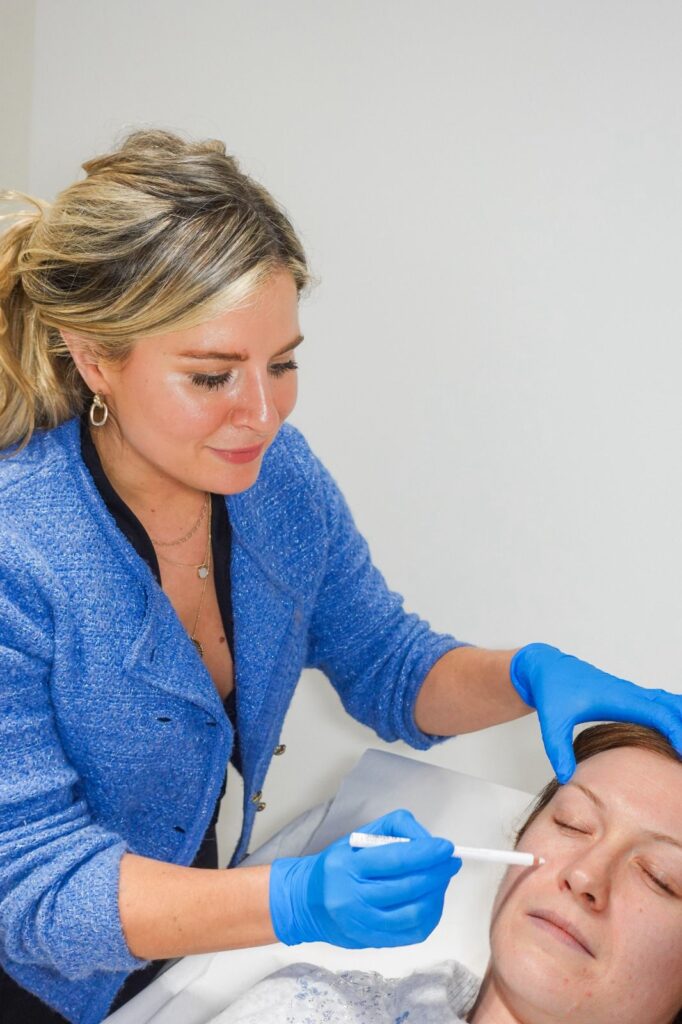
Our team, led by Medical Director Dr Fiona McCarthy (MBChB, MRCP, PhD), delivers every JULÄINE™ treatment as part of a personalised plan, often combining it with complementary treatments such as polynucleotides, Profhilo® Structura, or BBL (BroadBand Light) therapy to achieve comprehensive, layered rejuvenation.
If you’ve been weighing up JULÄINE™ vs Sculptra and want expert, impartial guidance on which approach is right for your skin, we’d love to help.
Book a consultation at The Bronte Clinic in London or Surrey to discover how JULÄINE™ can restore your skin’s natural firmness and vitality.