You can have clear, healthy skin and still feel that something is not quite right when you catch your reflection. The surface looks a little rough or uneven, pores seem more noticeable than they used to, and makeup no longer sits as smoothly as it once did. If you’ve been wondering how to improve skin texture on your face, and you would rather not jump straight to lasers or heat-based devices, this article is for you. There is a gentler, collagen-building route that suits a great many people, and it centres on two treatments we recommend at The Bronte Clinic.
Texture is one of the most common concerns our patients raise, and one of the most satisfying to improve. The key is understanding that smoother skin is built from within, by encouraging your own collagen, rather than simply polished from the surface.
How Can I Improve Skin Texture on My Face?
To improve skin texture on your face, you need to address what is happening beneath the surface, not just on top of it. Good skincare and daily sun protection form the essential foundation, but where texture is already established, one of the most effective approach is to stimulate the skin to rebuild its own collagen and renew itself. Two treatments do exactly this without relying on heat or laser energy: medical microneedling and JULÄINE™.
Both work with your skin’s natural regenerative processes rather than against them. Medical microneedling refines the surface and the upper layers mechanically, while JULÄINE™ rebuilds structural support more deeply. Used individually or together, they offer a considered, gradual way to improve skin texture on your face, and they suit people who want real change without the downtime that more aggressive treatments can involve.
What Causes Uneven Skin Texture?
Before choosing a treatment, it helps to understand what has changed. Uneven texture develops when the skin stops renewing and supporting itself as efficiently as it once did. Cellular turnover slows with age, so dead cells linger on the surface and create a rough, dull layer. Collagen and elastin decline from the mid-thirties onward, leaving the skin less firm and its surface less refined. Sun exposure, dehydration and past breakouts all add their own textural marks over time.
Because texture usually has several overlapping causes, it rarely responds to a single skincare change. This is also why treatments that rebuild collagen tend to outperform those that only exfoliate the surface: they address the underlying loss of structure and renewal, not just the symptom. If uneven tone is part of the picture too, it is worth understanding what causes dark spots on the face, as pigmentation and texture often overlap.
Medical Microneedling: Refining Texture Through Collagen Induction
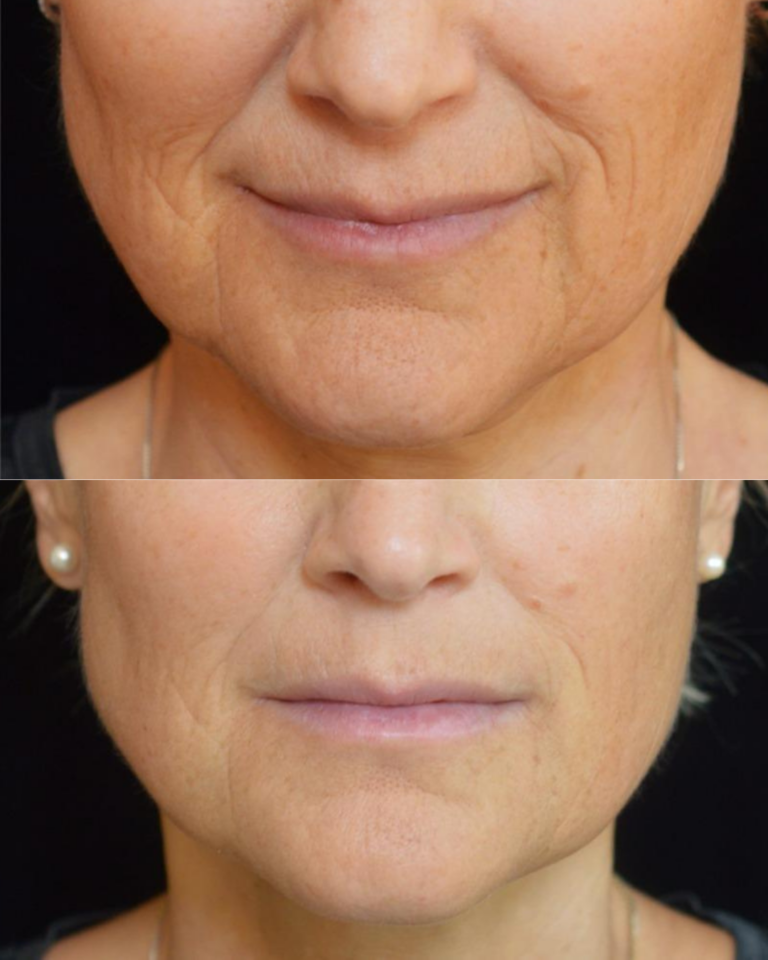
Medical microneedling, also known as collagen induction therapy, is a natural way to stimulate collagen and elastin for smoother, firmer skin. It uses a precision device to create tiny micro-channels in the dermis, which triggers the skin’s own wound-healing response and encourages cellular renewal. As the skin repairs those controlled micro-channels, it lays down fresh collagen, gradually refining the surface.
For texture specifically, this makes microneedling well suited to fine lines, uneven or rough skin, enlarged pores, and acne or surgical scarring. Because it works mechanically rather than with heat or light, it tends to be more gentle and well tolerated, and many patients manage the treatment comfortably with little more than a light prickling sensation.
A session usually takes between 15-30 minutes, and most people notice a healthy glow and smoother texture within a few days, with the more meaningful improvements developing over the following 4-6 weeks as new collagen forms.
Microneedling is best approached as a course rather than a one-off. We generally recommend a series of 3-6 sessions spaced around 4-6 weeks apart, tailored to your skin and your goals, with results continuing to build over time.
JULÄINE™: Rebuilding Structural Support From Deeper Down
Where microneedling refines the skin from the surface downward, JULÄINE™ works from deeper within. It is a poly-L-lactic acid (PLLA) injectable biostimulator, which means it does not fill or freeze anything; instead, it prompts your skin to produce new collagen of its own. Once introduced into the skin, it stimulates fresh collagen production, gradually improving firmness, elasticity and overall skin quality.
Although JULÄINE™ is often associated with firmness and volume, uneven skin texture is one of the concerns it is used to treat, because so much of what we perceive as texture rests on the structural support beneath. When that foundation is rebuilt, the surface above it looks smoother and more even. Treatment is quick, usually around 10-15 minutes, and administered with a cannula, which most patients find comfortable. Downtime is minimal, with any mild redness or swelling typically settling within a day or two.
Results build gradually, which is precisely the point. Patients often notice initial tightening within the first few weeks, with the optimal outcome around 2 months after treatment and improvements becoming more pronounced over 2-3 months as collagen regenerates. A typical plan involves 3 treatments spaced roughly 4-6 weeks apart, and the results can last up to 2 years. If firmness is your primary concern alongside texture, our guide to improving skin firmness without surgery explores JULÄINE™ in more depth.
Microneedling or JULÄINE™: Which Is Right for Your Skin?
This depends entirely on what is driving your textural concern, which is why we always begin with an assessment rather than a fixed protocol. As a broad guide, medical microneedling tends to be the stronger starting point where the concern is surface refinement: rough patches, enlarged pores, fine textural unevenness and shallow scarring. JULÄINE™ comes into its own where texture is bound up with a deeper loss of firmness and structural support, particularly in skin that has begun to soften as well as roughen.
For many people, the most complete result comes from combining the two, using microneedling to refine the surface and JULÄINE™ to rebuild the foundation beneath. Neither relies on heat or laser energy, which makes this pairing a genuinely gentler route to smoother skin, and a good option for anyone not yet ready for a device-based treatment.
How Does This Compare to Heat-Based Treatments?
It’s worth noting that microneedling and JULÄINE™ are not the only way to improve texture, and for some concerns they are not the most powerful. Where texture damage is more structural or advanced, radiofrequency treatments that combine microneedling with heat can deliver deeper remodelling. We explore that route fully in our guide to the skin texture treatments that work, including where Morpheus8 fits in.
The distinction is really one of depth and intensity. Heat-based devices remodel more aggressively and can suit more established textural damage, but they involve more downtime. The microneedling and JULÄINE™ route works more gently and gradually, which many people prefer, especially for early or moderate texture concerns and for those who want to avoid a recovery period. There is no single best answer, only the right match for your skin, which is exactly what a consultation is designed to find.
Improving Skin Texture at The Bronte Clinic
Whichever route suits you, improving skin texture on your face works best when the treatment is matched carefully to the cause, and delivered by a doctor or nurse who can be honest about what will and will not help.
As a CQC-registered, medically led clinic, that assessment is where we always begin. Our team, led by Medical Director Dr Fiona McCarthy (MBChB, MRCP, PhD), will look at your skin’s surface quality, collagen condition, pores and any scarring before recommending an approach built around your skin rather than a generic protocol. Daily broad-spectrum SPF remains the single most effective way to protect your results and prevent further textural damage, and it underpins everything we do.
If you would like to know how to improve skin texture on your face in a way that genuinely suits you, the best first step is simply to have it properly assessed. You can book a consultation at either our London or Surrey clinic, and we’ll help you find the right path to smoother, healthier-looking skin.