
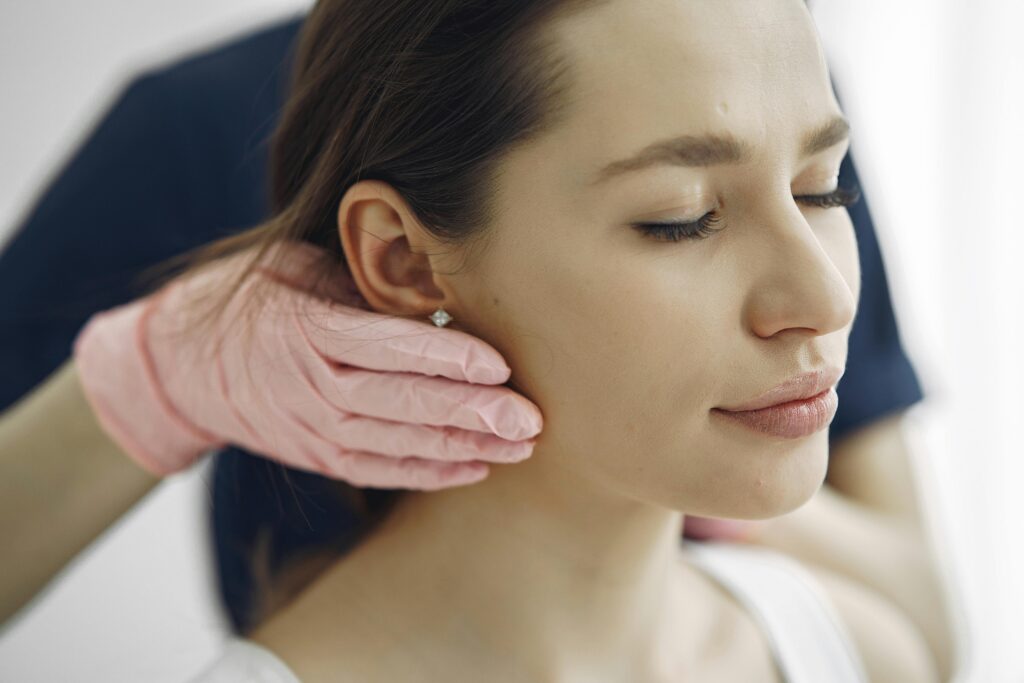
You wake up with a dull ache across your jaw. Your teeth feel tender. Your temples throb with a headache that seems to start before you even open your eyes. If this sounds familiar, there is a good chance you are grinding your teeth – a condition known as bruxism – and you may well have arrived here because someone mentioned that Botox for teeth grinding could help.
They are right. It can. But like most treatments worth considering, the answer comes with important caveats. Botox for teeth grinding is not suitable for everyone, it is not a permanent cure, and it works best when it is part of a broader strategy rather than a standalone fix.
At The Bronte Clinic, we treat bruxism regularly and find it to be one of the most satisfying conditions to manage, because when the right patient receives the right treatment, the relief can be genuinely life-changing.
This article explains how Botox for teeth grinding works, who it is most suited to, what to realistically expect, and how to decide whether it is the right option for you.
What Is Bruxism and Why Does It Matter?
Bruxism is the habitual, often unconscious grinding or clenching of the teeth. It can occur during sleep, known as nocturnal or sleep bruxism, or during waking hours when you are stressed, concentrating, or anxious. Many people do both without realising it.
The forces involved are significant. The masseter muscle, the large muscle responsible for closing the jaw, is one of the strongest muscles in the human body relative to its size. When it contracts repeatedly and forcefully during grinding or clenching, the consequences accumulate. Tooth enamel wears down. Teeth chip, crack, or become hypersensitive. The temporomandibular joint (TMJ) becomes strained, leading to jaw pain, clicking, and restricted movement. Chronic headaches (particularly on waking) are common. Facial pain, earache, and disrupted sleep frequently follow.
Beyond the physical symptoms, bruxism can also change the shape of your face over time. Prolonged overactivity of the masseter muscles causes them to enlarge, producing a visibly wider, squarer jawline that many patients find aesthetically undesirable.
The condition affects more than one in ten adults in the UK, yet it remains widely undertreated, partly because many people are unaware they grind their teeth, and partly because the NHS does not typically offer Botox as a treatment option, leaving patients to seek private care.
How Botox for Teeth Grinding Works
Botox, a purified form of botulinum toxin type A, works by temporarily blocking the nerve signals that tell a muscle to contract. When injected into the masseter muscle, it reduces the muscle’s ability to generate the powerful, involuntary contractions that drive grinding and clenching.
It is important to understand what this means in practice. Botox for teeth grinding does not paralyse the jaw. The dosage used for bruxism is carefully calibrated to weaken the excessive, involuntary force that causes damage, while preserving your normal ability to chew, speak, and express. You will still be able to eat and talk without any difficulty. What changes is the intensity of the unconscious clenching and grinding that happens beyond your control.
The procedure itself is quick and straightforward. At The Bronte Clinic, Botox for bruxism is administered through a small number of targeted injections into each masseter muscle. The treatment takes less than five minutes, requires no anaesthetic, and involves minimal discomfort – most patients describe a brief pinching sensation at each injection point.
What Results Can You Realistically Expect?
The effects of Botox for teeth grinding typically begin to develop within three to five days, with full results becoming apparent within ten to fourteen days. Most patients notice a significant reduction in jaw tension, morning headaches, and facial pain within the first two weeks.
Over the following weeks, as the masseter muscle relaxes and gradually reduces in size, many patients also notice a softening of the jawline – a cosmetic benefit that, for some, is as welcome as the functional relief.
Results typically last between three and six months. Bruxism is a chronic condition, so the grinding will gradually return as the Botox wears off. Most patients choose to maintain their results with repeat treatments two to three times per year. Over time, some patients find that the interval between treatments lengthens as the masseter muscle is retrained and its resting tone decreases.
It is worth setting one important expectation: Botox for teeth grinding manages the condition, it does not cure it. The underlying triggers – stress, anxiety, sleep disturbance, or neurological habit – remain, which means ongoing management is essential. This includes continuing to wear your mouth guard, particularly at night, to protect your teeth and enamel even while the Botox is active. The two work hand in hand — Botox reduces the destructive force behind the grinding, while your guard provides a physical barrier against wear and damage. This is why we approach bruxism as a condition that benefits from a considered, multi-faceted strategy rather than a single injection
Who Is a Good Candidate for Botox for Teeth Grinding?
Botox for teeth grinding is most effective for patients who experience moderate to severe bruxism with significant jaw pain, headaches, or tooth damage, have tried conservative measures such as mouth guards without sufficient relief, are aware of habitual daytime clenching that they cannot control, or are bothered by masseter enlargement and the resulting change in facial shape.
It is also well-suited to patients who have been diagnosed by their dentist as grinding but are not experiencing adequate symptom control from dental interventions alone.
Who May Not Be Suitable?
Botox for teeth grinding is not appropriate for everyone. Patients who are pregnant or breastfeeding cannot receive the treatment. Those with certain neuromuscular conditions, such as myasthenia gravis or Lambert-Eaton syndrome, are also not suitable candidates. If your bruxism is very mild or infrequent, the cost and commitment of ongoing Botox treatments may not be justified when simpler measures could suffice.
It is also worth noting that the cause of bruxism matters. If your grinding is primarily driven by an underlying sleep disorder, such as obstructive sleep apnoea, Botox will address the symptom but not the root cause. In these cases, a medical assessment of the underlying condition is the priority. At The Bronte Clinic, our doctors are trained to identify when bruxism is a symptom of something broader and will advise accordingly.
How Does Botox Compare to Mouth Guards?
This is one of the most common questions we hear. The answer is that Botox for teeth grinding and mouth guards serve different purposes, and for many patients, they work best together.
A mouth guard, or occlusal splint, is a physical barrier worn over the teeth, typically during sleep, to prevent enamel damage from grinding. It protects the teeth, but it does not reduce the muscular force behind the grinding itself. Many patients find that they still clench forcefully against the guard, waking with jaw pain and headaches despite wearing it.
Botox works at the muscular level. It reduces the force of the grinding, which means less strain on the jaw, less pain, fewer headaches, and less damage to the teeth and TMJ. For patients whose symptoms are driven by the intensity of the muscular contraction rather than by tooth contact alone, Botox addresses the root of the problem in a way that a guard cannot.
In practice, many of our patients use both. The mouth guard protects the teeth during the transition period before Botox takes full effect and provides ongoing enamel protection. The Botox reduces the destructive force that makes the guard necessary in the first place. Together, they offer the most comprehensive approach to managing bruxism.
What Happens at a Bruxism Consultation
Our team, led by Medical Director Dr Fiona McCarthy (MBChB, MRCP, PhD) believe that proper assessment is what separates effective treatment from guesswork – we do not simply inject Botox into the jaw on request. Every patient presenting with bruxism receives a thorough clinical assessment first.
Our team will discuss your symptoms, their severity, and their impact on your daily life. We will review your medical history, ask about sleep patterns and stress levels, and examine the masseter muscles and temporomandibular joint. We will also want to understand what you have already tried, whether that is a mouth guard from your dentist, physiotherapy, stress management techniques, or medication, and how effective those approaches have been.
This assessment allows us to determine whether Botox for teeth grinding is the right treatment for you specifically, or whether your symptoms suggest an underlying issue that should be investigated further before proceeding.
Struggling with teeth grinding, jaw pain, or morning headaches? Book a consultation at The Bronte Clinic in London or Surrey for an honest assessment of whether Botox for teeth grinding is the right approach for you.